
Zapier has built well over 70,000 individual integration pages, one for nearly every app-to-app combination its platform supports, and those pages drive a substantial share of its total organic traffic. Most B2B technology companies with ten or fifteen real integrations have a single page listing them as a grid of logos, with no dedicated content behind any single one. The gap between those two approaches is not really about scale. It is about understanding what an integration page is actually for.
What Is an Integration Page, and Why Does It Convert Differently Than Other Content?
An integration page is a dedicated piece of content answering the specific question "how does [Your Product] work with [Specific Other Tool]." It sits in a distinct category from a blog post or a general feature page because the buyer landing on it has already decided they need both tools to work together, and they are checking whether that combination is possible and how well it works before they commit to either platform, or before they justify staying on a stack they already have.
Integration pages targeting a "tool A plus tool B" query convert at meaningfully higher rates than general educational content, because the visitor's intent is already resolved. They are not learning about a category. They are validating a specific, practical decision they are close to making.
The Mistake Almost Every B2B Company Makes With Integration Content
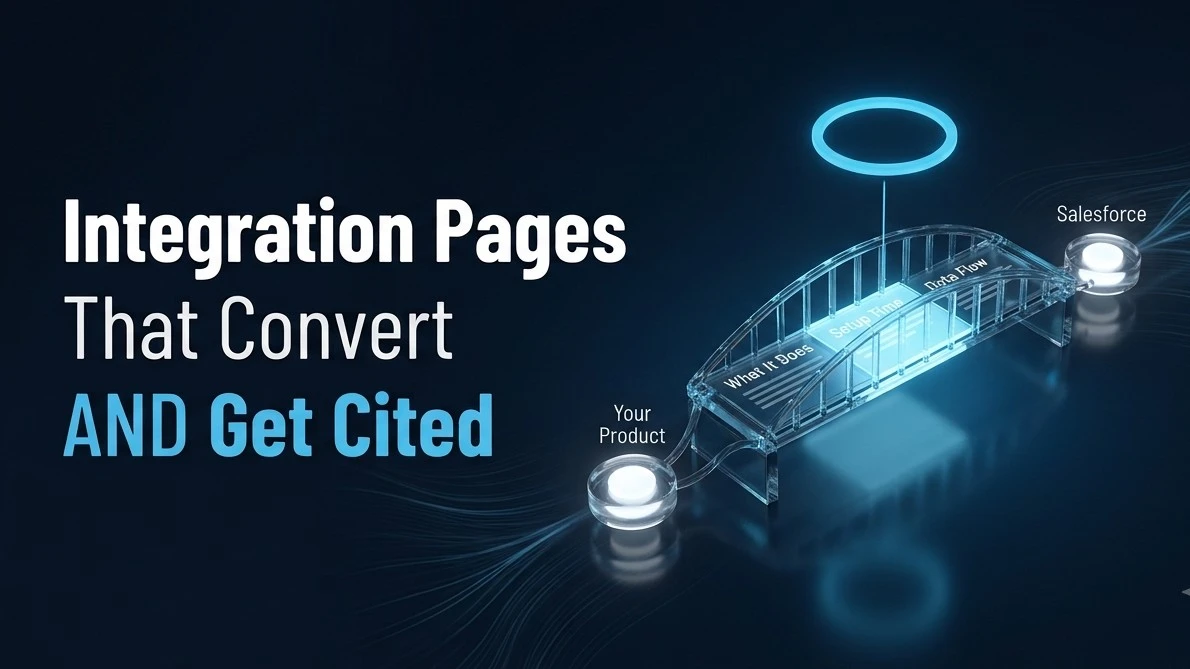
The most common structural error is the minimalist integrations page: a grid of partner logos, maybe a one-line description, with no dedicated content behind any single integration. This fails on two fronts simultaneously. It hurts SEO and AI visibility because there is not enough substantive content on the page to signal quality or topical relevance for integration-specific search queries. And it hurts conversion because a prospect who is specifically evaluating the Salesforce integration, say, gets nothing that answers their actual question: what data flows between the systems, what does setup involve, what problem does this specific combination solve.
The fix is not complicated, but it does require treating each significant integration as its own content asset rather than a line item in a directory.
The Structure That Converts and Gets Cited Simultaneously
- A dedicated URL and heading naming both products explicitly. "[Your Product] + Salesforce Integration" as both the page title and the H1. This single change does more for both search visibility and AI extraction than almost anything else on the page, because it directly matches the exact phrasing a buyer types into a search bar or an AI platform when researching this specific combination.
- A direct answer to what the integration does, in the first two sentences. Not a company mission statement. A specific, factual description: what data moves between the two systems, in which direction, and what the practical result is for the person using both tools. This is the sentence an AI model extracts when a buyer asks "does [Your Product] integrate with Salesforce" in a chat interface.
- A specific-pain-point section, not a generic benefits list. The strongest integration pages address the actual friction the integration solves, described from the buyer's operational perspective. If the integration solves the problem of manually re-entering customer data between two systems, the page should name that specific manual process and describe exactly how the integration eliminates it, rather than a vague claim about improved efficiency.
- Setup expectations stated honestly. How long does configuration actually take, what permissions or access are required, does it need developer involvement or can a business user complete it. Buyers evaluating an integration before committing to a purchase decision want this information before they talk to sales, and a page that withholds it pushes the buyer toward a demo call that could have been avoided, or toward a competitor's page that already answered the question.
- A conversion path specific to the integration context, not a generic demo request. "See how the Salesforce integration works in a 20-minute walkthrough" converts better than a generic "book a demo" button, because it acknowledges the specific evaluation the visitor is already in the middle of.
Programmatic Scale Without Programmatic Thinness
The lesson from Zapier's integration page volume is not that every company should build tens of thousands of pages. It is that a consistent, well-designed template, applied to every integration that has genuine buyer search demand, can scale content production without sacrificing the substance each page needs. The critical requirement, and the one that gets ignored when companies try to replicate this at scale, is that each generated page must provide genuine value specific to that integration. Thin, templated pages with no unique content for the specific combination they claim to cover get penalized under modern search quality standards, and they fail to earn AI citations for the same underlying reason: there is nothing in them for a model to extract with confidence.
The practical approach for a company with ten to twenty real integrations is building one strong template with the five structural elements above, then populating each integration's specific details, data flow, specific pain point solved, specific setup requirements, rather than writing generic filler and hoping volume compensates for depth.
Which Integrations Deserve a Dedicated Page Versus a Directory Listing
Not every integration justifies the same level of investment. The integrations that most frequently come up in sales conversations, that have measurably higher search volume, or that disproportionately influence whether a prospect converts, deserve a full dedicated landing page with the complete structure above. Integrations with lower search demand or lower strategic importance can live in a well-organized directory, categorized by use case, persona, or software type rather than a flat alphabetical list, which still gives visitors a reasonable path to find what they need without requiring a fully built-out page for every single connection.
The category-based directory structure, rather than a flat list, also improves the user experience for the buyer navigating the page, because they can go directly to the category most relevant to their situation rather than scanning an undifferentiated list of logos.
The Partnership Layer That Compounds the Effect
Every significant integration involves another company that has its own directory or partner marketplace listing your product. Reviewing every one of those listings, confirming they link to your best specific integration page rather than defaulting to your homepage, and requesting updates where they do not, is a frequently overlooked source of qualified referral traffic and backlink authority. A partner directory listing that sends a warm, specifically interested visitor to your generic homepage instead of the dedicated integration page answering their exact question is a conversion opportunity lost at the exact moment intent was highest.
Frequently Asked Questions
What makes an integration page different from a general product feature page?
An integration page answers a narrower, higher-intent question: how does this specific product work with this specific other tool? The visitor has typically already decided they need both platforms and is validating whether the combination works well, rather than learning about the product category broadly. This narrower intent means integration pages convert at meaningfully higher rates than general educational or feature content, but only when the page contains genuine, specific detail about that exact combination.
Why do most B2B companies fail to get value from their integration pages?
The most common failure is a minimalist directory approach: a grid of partner logos with no dedicated content behind any individual integration. This under-serves both search visibility, because there is insufficient content to signal topical relevance for integration-specific queries, and conversion. After all, a prospect evaluating a specific integration gets no answer to their actual questions about data flow, setup requirements, or the specific problem the integration solves.
How should a B2B company decide which integrations deserve a full dedicated page?
Prioritize integrations that come up most frequently in sales conversations, that show measurably higher search volume for the specific combination query, or that disproportionately influence purchase decisions when they are available. These integrations justify the investment of a full dedicated page with detailed content. Lower-priority integrations can live in a well-organized, categorized directory without requiring the same level of individual content investment.
Does building many integration pages risk being penalized as thin or programmatic content?
Yes, if the pages are templated without genuine, specific content for each combination. The distinction that matters is whether each page provides real value specific to that exact integration, the actual data flow, the actual setup process, the actual problem solved, rather than a generic template with the integration name swapped in. Search quality systems and AI citation logic both penalize thin, interchangeable content, regardless of how many pages a company produces.
How does an integration page earn AI citations specifically, beyond ranking in traditional search?
By directly and specifically answering the question a buyer would ask an AI platform: does this product integrate with this other tool, and what does that integration actually do? A page whose first two sentences state exactly what data moves between the systems, in which direction, and what the practical outcome is, gives an AI model a precise, attributable answer to extract. A page that only shows a logo with no supporting content gives the model nothing to cite, regardless of how prominently that logo appears to a human visitor.
References
- Powered by Search, How to Optimize SaaS Integration Pages to Drive Organic Traffic and Leads, FieldInsight case study and page structure framework: https://www.poweredbysearch.com/blog/how-to-optimize-saas-integration-pages/
- Mettevo, SaaS SEO Services: Drive Growth for Your Software Business, Zapier integration page scale and programmatic SEO methodology: https://mettevo.com/blog/article/saas-seo-services-in-2026-strategies-frameworks-and-how-to-choose-the-right-agency
- ALM Corp, SaaS SEO: The Complete Strategy Guide, Zapier 70,000-plus integration page benchmark and Helpful Content quality standards: [suspicious link removed]
- Design Revision, The SaaS SEO Playbook: Complete Guide 2026, programmatic SEO structure and integration page conversion benchmarks: https://designrevision.com/blog/seo-for-saas
- Gravitate, B2B SaaS SEO Strategies for Growth in 2026, integration directories as product-led content strategy: https://www.gravitatedesign.com/blog/b2b-saas-seo-strategies/


